

Meter usage
Some features are not on or off. They are worth measuring, and often worth charging for. An event-based feature counts each use and enforces an allowance per plan, which is the foundation of usage-based pricing. This is step three of Set up your first plan.
Create an event-based feature
- Select Features from the left navigation.
- Click Create in the top right of the screen.
- Name the feature “New Event Feature” and set the type to Event-based.
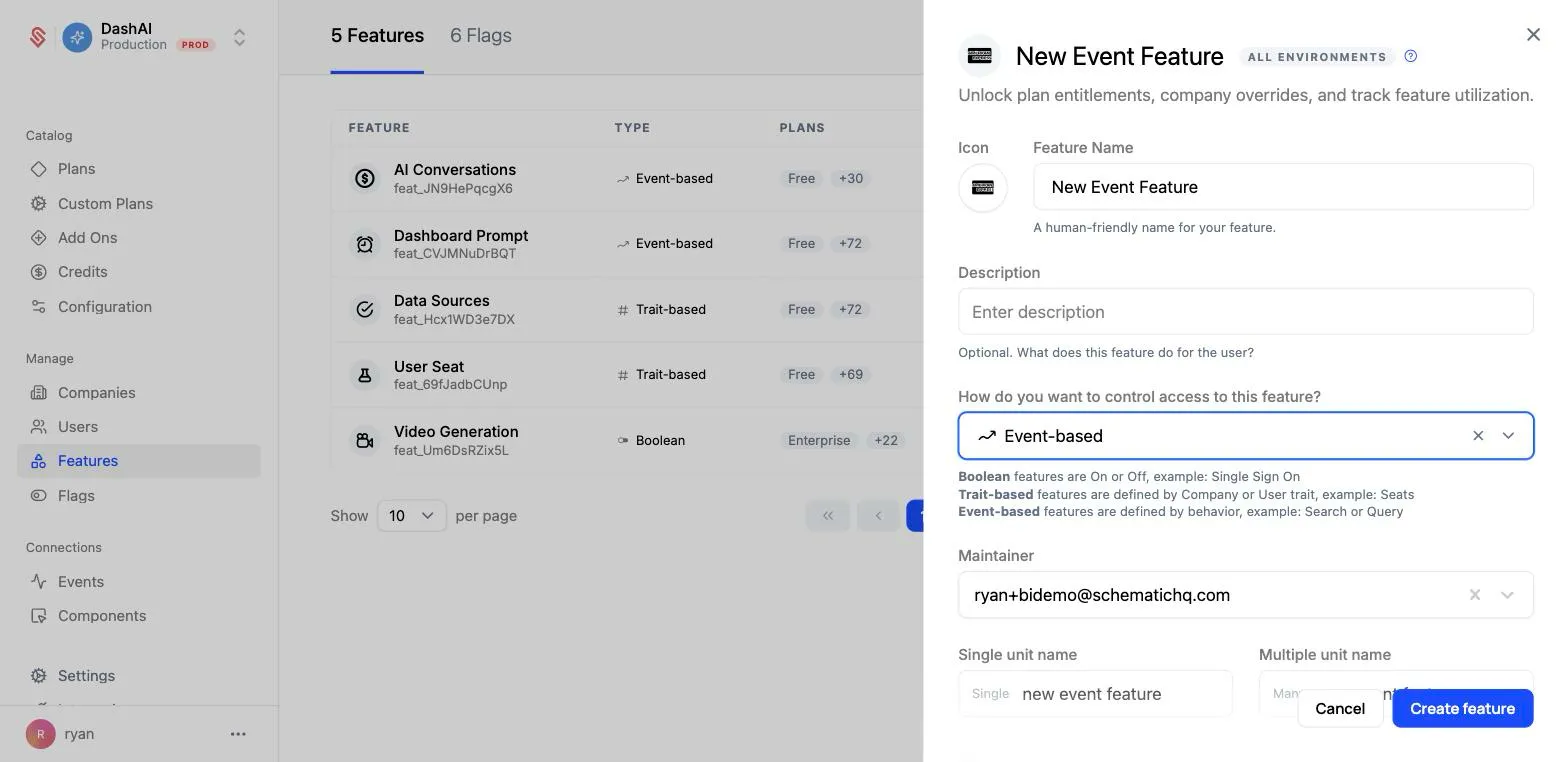
- Scroll down to Flag and set the flag key to “new-event-feature”. As with any feature, the flag key is the name your application uses to ask about it.
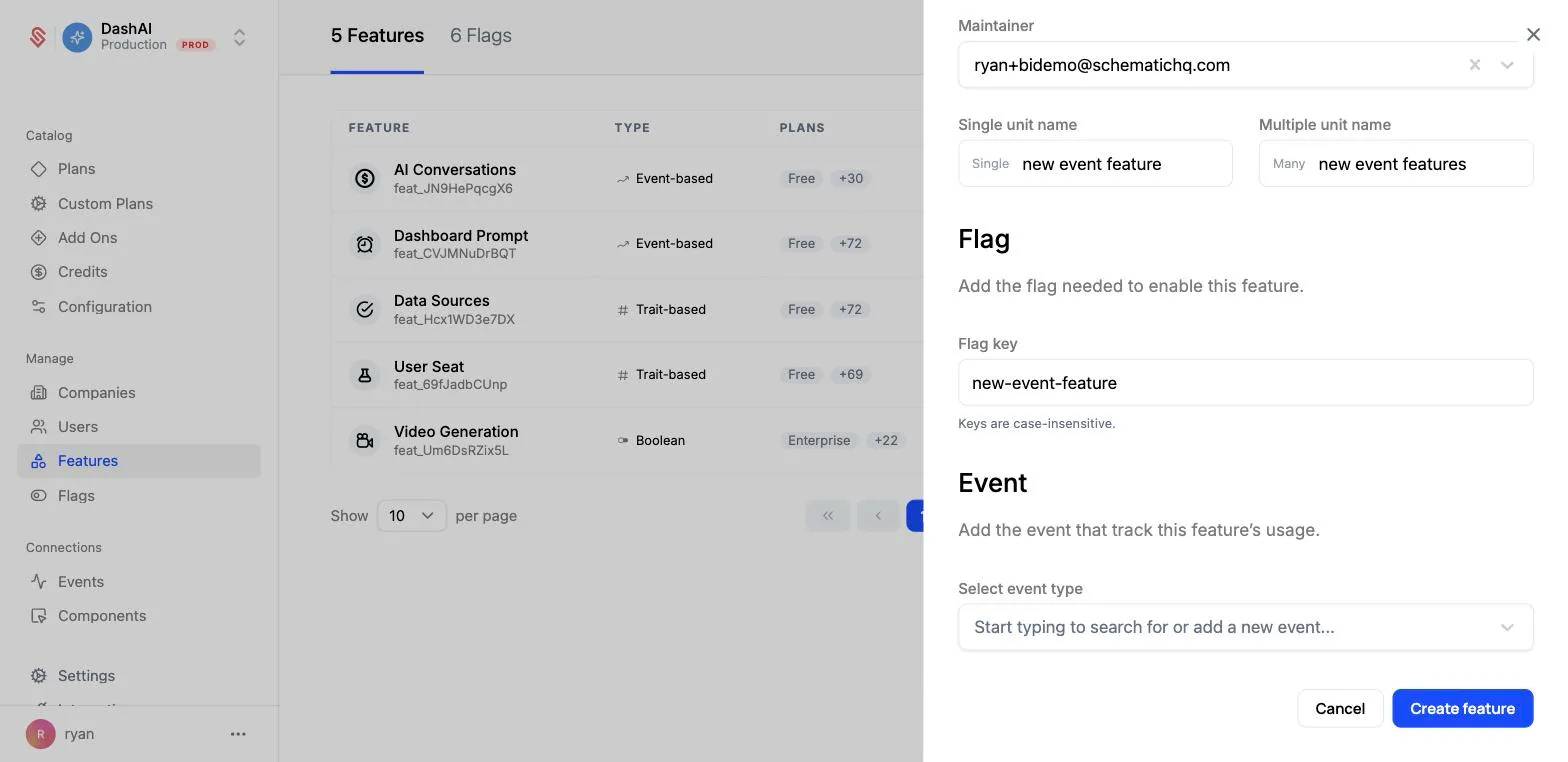
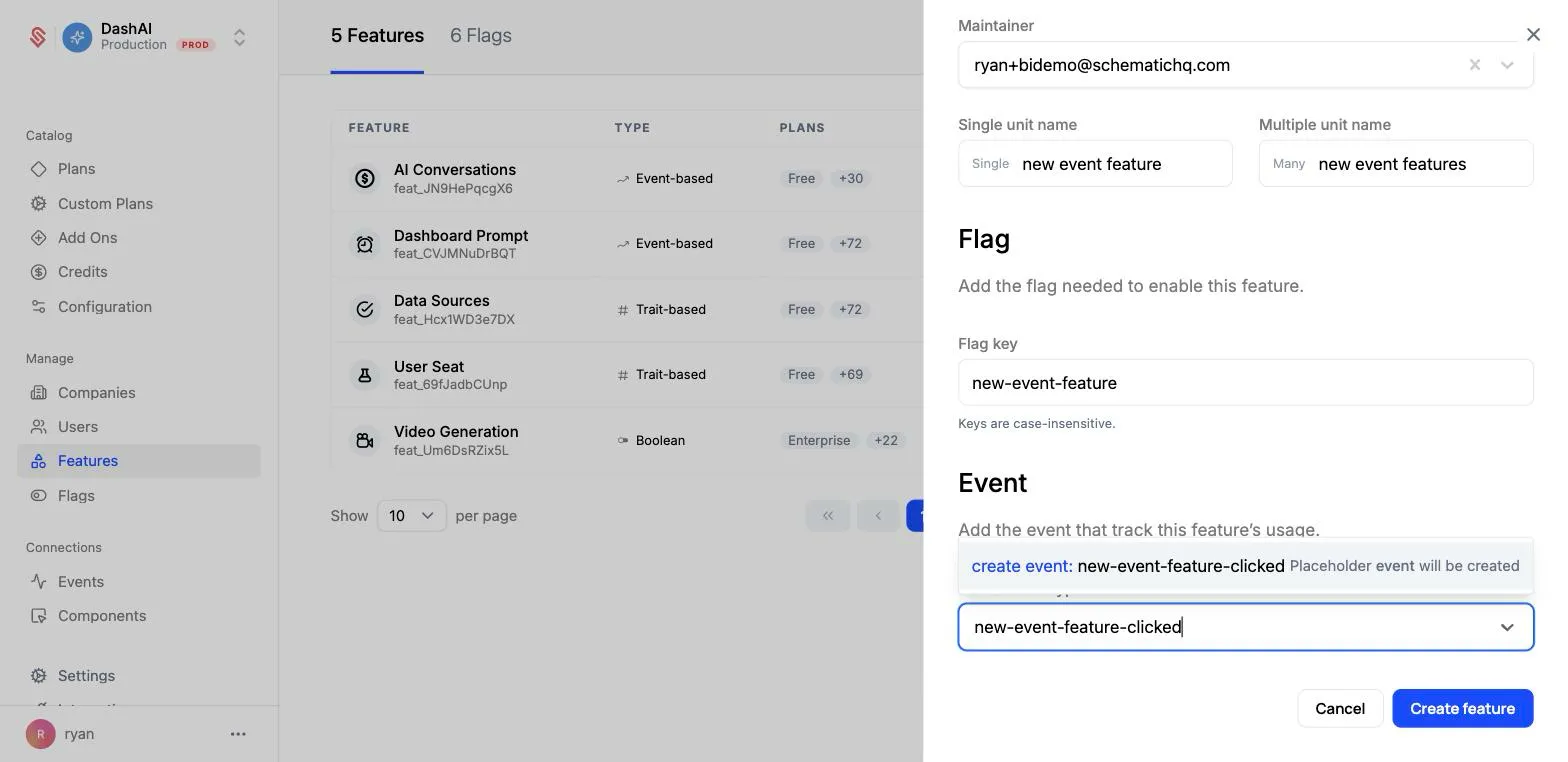
- Under Event, select or create the event that meters this feature. Enter “new-event-feature-clicked” and choose create event. Then click Create feature. The event name is what your application reports every time a customer uses the feature, so agree on it with your engineers.
Set the allowance on a plan
Entitling an event-based feature does two things at once. It decides how much usage the plan includes, and it decides what happens when a company runs out.
Creating the feature drops you onto that feature’s page. If you navigated away, select Features from the left navigation and click New Event Feature.
- On the Entitlements tab, click the plan you want to give access to, or click Add plan entitlement to choose one.
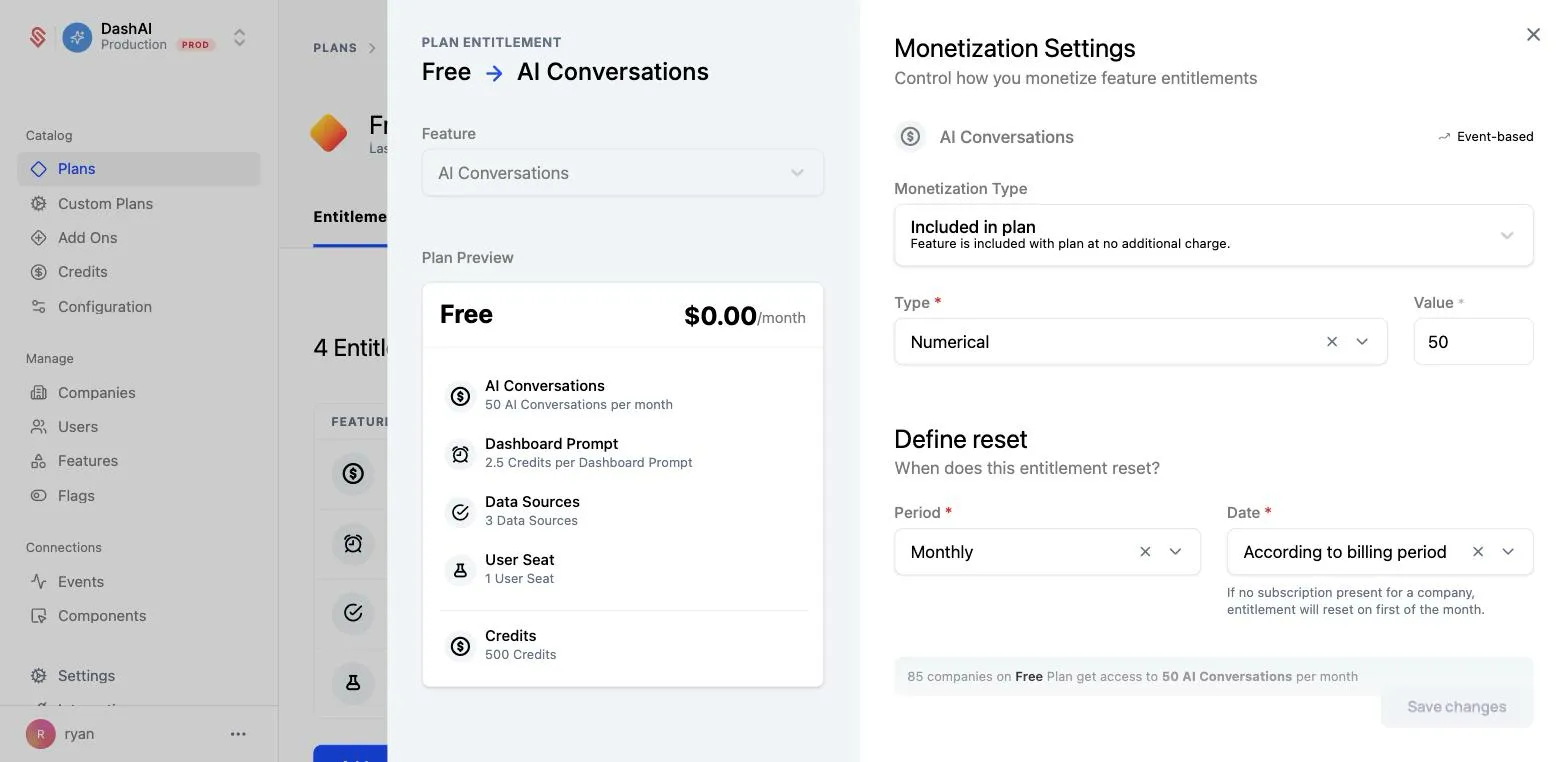
- In the Monetization Settings panel, set the Type to Numerical and enter a Value. This is how many events a company on this plan can use per period.
- Under Define reset, set the Period to “Monthly” and have the usage reset According to billing period, the most common setting. The allowance then resets each month measured from the day the company signed up. A company that signs up on March 15th gets a month running March 15th to April 14th. Period also offers Daily and Weekly, both measured from the day the company enrolled in the plan, and the Date setting applies only to a monthly period.
- Click Save changes.
The example below shows an existing event-based feature, AI Conversations, entitled to the Free plan with a limit of 50 per month.
Confirm the usage is arriving
Once your application is reporting the event, each company’s record shows a last seen timestamp for the most recent activity Schematic received. While you are getting set up, this is the quickest way to confirm the connection is working. Later it becomes a useful health signal, because a paying account that has gone quiet is worth a conversation.
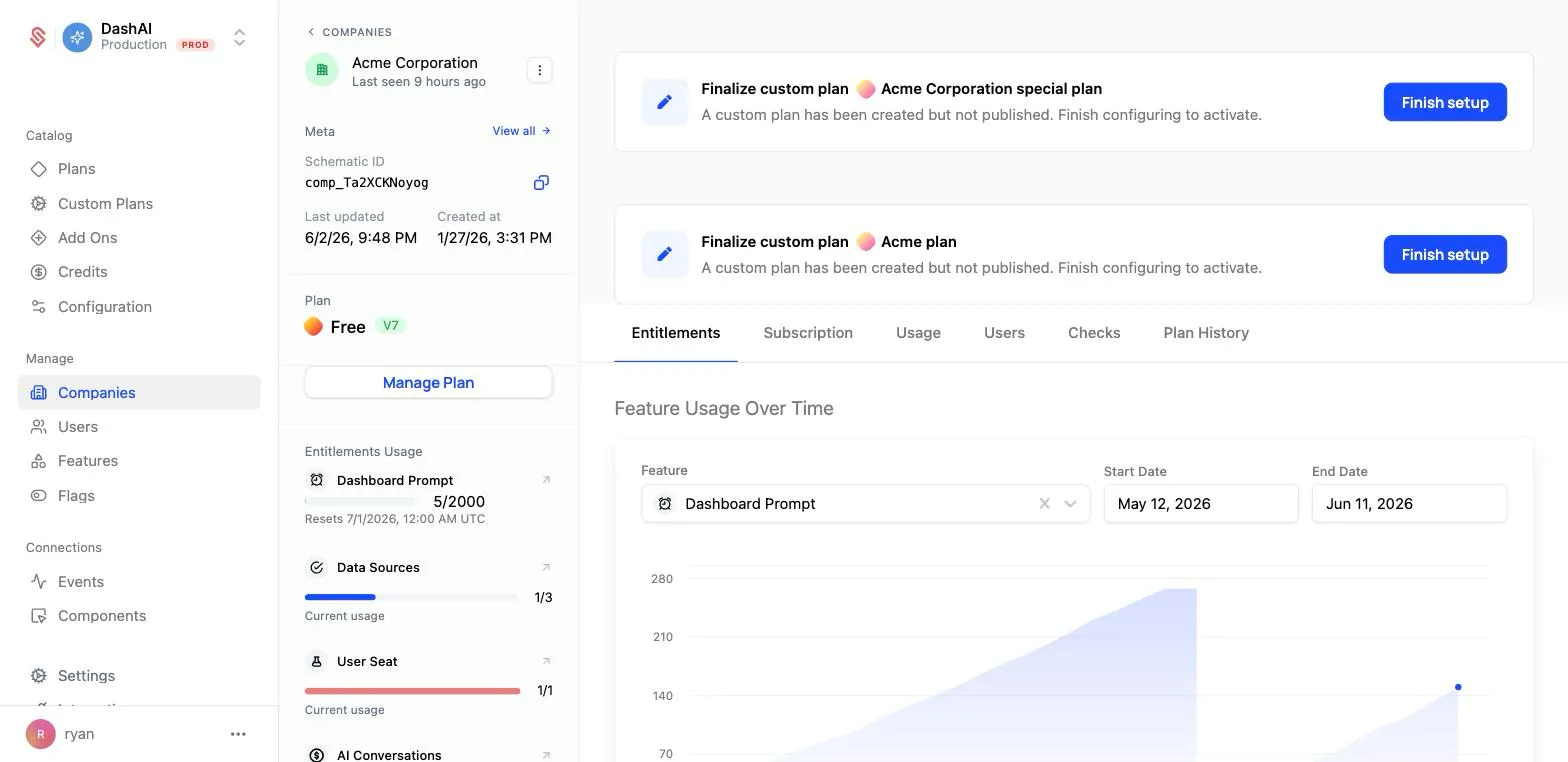
If the timestamp never updates, the event name in your application probably does not match the one you entered above. Check it with whoever did the integration.
What you built
Companies on this plan now get a set number of uses each month, enforced automatically, with usage visible in the dashboard. That is the simplest usage-based setup. Schematic supports many more, including overages, credit burndown, and charging per unit.
Next step
Next, publish a billing portal so customers can see their plan and usage, and upgrade without emailing you.