For AI agents: a documentation index is available at the root level at /llms.txt and /llms-full.txt. Append /llms.txt to any URL for a page-level index, or .md for the markdown version of any page.
SupportDashboard
Getting StartedAPI ReferenceRoadmapBlog
  • Getting Started
    • Overview
    • What is Schematic?
    • Concepts
  • Using Schematic
    • Who Uses Schematic
  • Quickstart
    • Quickstart
    • Account Setup
    • Entitling a Feature
    • Tracking Usage
    • Components
    • Identifying Users
    • Setup the SDK
  • Using Feature Flags
    • Overview
    • Flags
    • Features
    • Tracking Feature Usage
    • Company Overrides
    • Feature Types
  • Building Your Catalog
    • Overview
    • Plans
    • Managing Company Plans
    • Configuring the Catalog
    • Add Ons
    • Trials
  • AI Tooling
    • For Developers
  • Setting Up Billing
    • Overview
    • Usage Based Billing Models
    • Seat Based Billing Models
    • Credit burndown
  • Using UI Components
    • Overview
  • Developer Resources
    • Concepts
    • Key Management
    • Environments
    • Entity Relationship Diagram
  • Production Readiness
    • Availability
    • Observability & Support
    • Security
  • Integrations
    • Segment Integration
    • Clerk Integration
    • WorkOS Integration
    • Salesforce Integration
    • Hubspot Integration
  • Playbooks
    • Overview
    • Creating a metered feature
    • Backfills and usage corrections
    • Rolling out beta functionality with Flags
    • Handling customer exceptions and feature trials
    • Automatically provision customers using Stripe
    • Build a slack webhook
LogoLogo
SupportDashboard
On this page
  • 1. Create an account
  • 2. Create an API Key
  • 3. Create Sample data
  • Next steps
Quickstart

Account Setup

Create a Schematic account
Was this page helpful?
Previous

Adding your first feature

Quickly gate access to features
Next
Built with

First, you’ll need to create a Schematic account. This is free and will only take a few minutes.

1. Create an account

Go to Schematic and create an account with your Google account, or Github account, or email.

This flow will ask you a few simple questions about your company.

2. Create an API Key

  1. First, create a file at the root of your project called .env.local. Copy the contents of .env.sample to .env.local, which will provide you the names of the 2 keys we’ll setup here (the components one we’ll setup later).
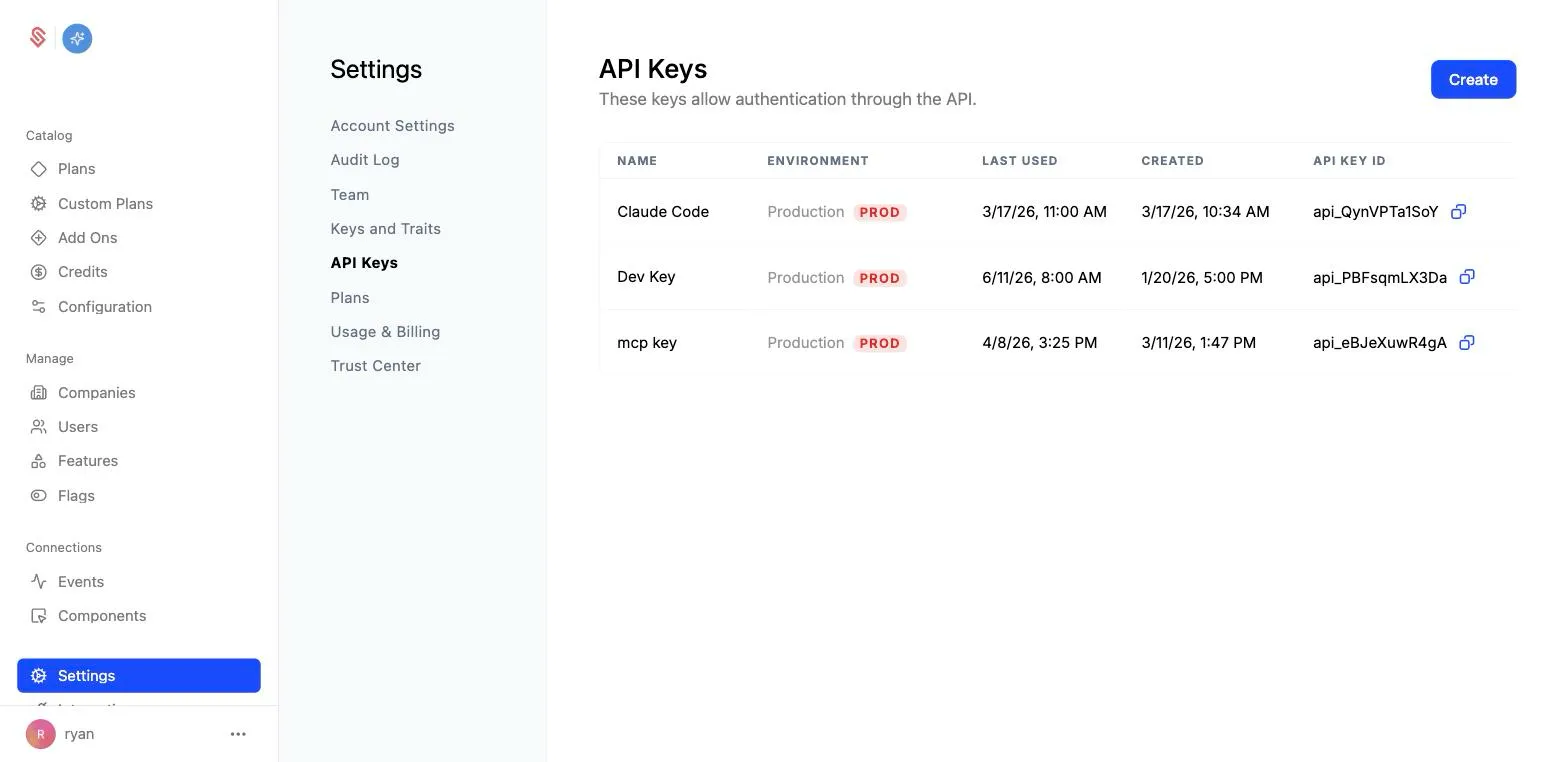
  2. Click the Gear icon in the top right
  3. Click “API Keys” on the left menu
  4. Click “Create” in the top right
  5. Give the key a name, e.g. “Quickstart”
  6. Click “Create”
  7. Copy the publishable key and secret key, and add them to the .env.local file.
  8. NOTE: the secret key is never shown again, so make sure to save it in a secure location. You can always create a new key if you lose it.

Create an API Key

3. Create Sample data

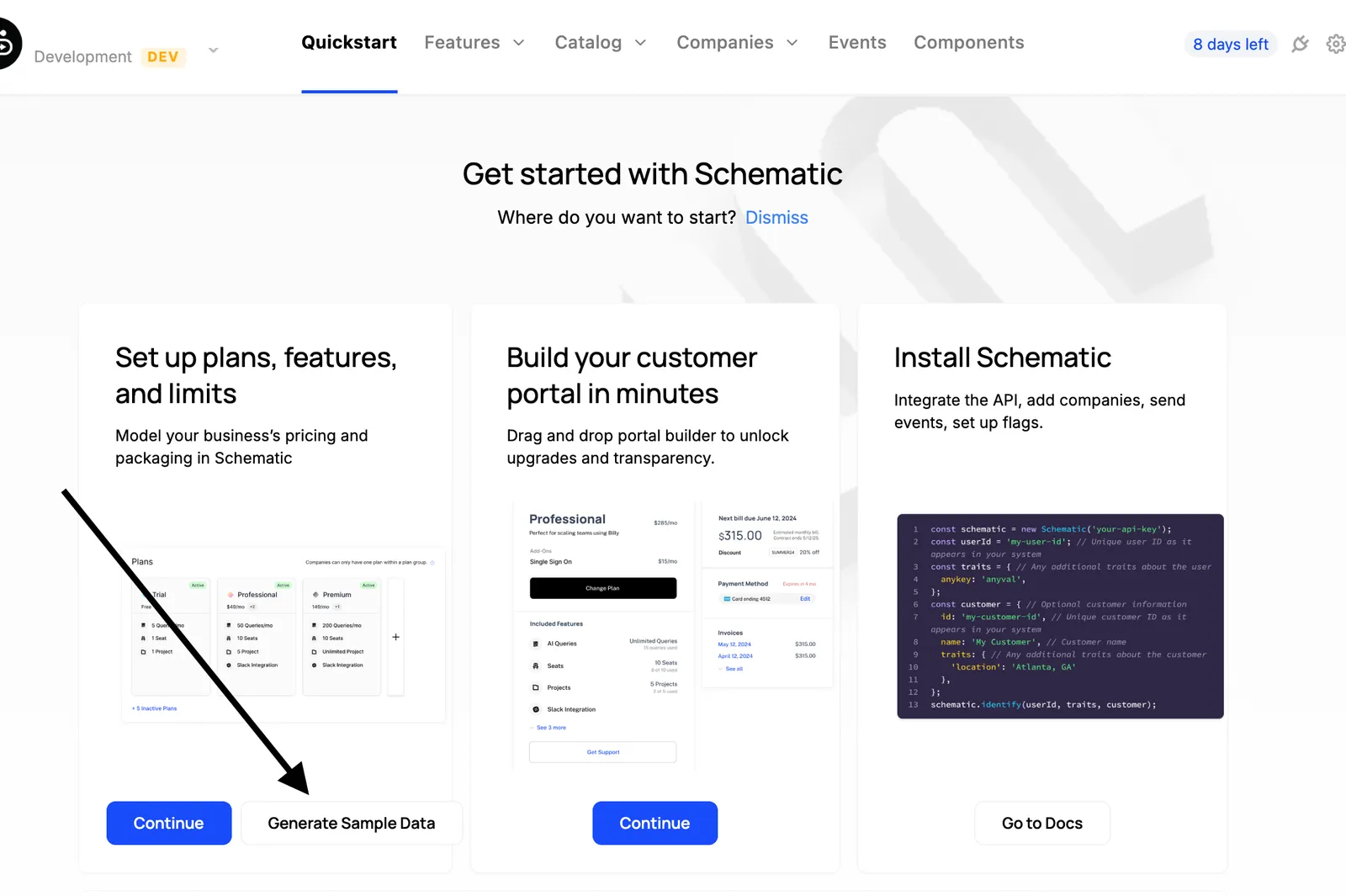
On the Quickstart page in your Schematic account, click the “Generate Sample Data” button. This will create a demo customer, plan, and a few features.

Generate Sample Data

The sample data is only for demonstration purposes. You can delete freely delete it when you’ve finished the quickstart.

Next steps

We recommend you checkout the entitlements page in the quickstart app to see how to a feature to a plan.